A Pillar of Modern Manufacturing
Moulding services are an essential aspect of modern manufacturing, enabling the production of complex parts with precision, efficiency, and consistency. From the automotive and aerospace industries to consumer electronics, medical devices, and packaging, moulding plays a critical role in shaping the components and products that are integral to our daily lives. The evolution of moulding technologies has revolutionized production processes by reducing costs, improving product quality, and speeding up time-to-market.
Introduction
Moulding services are an essential aspect of modern manufacturing, enabling the production of complex parts with precision, efficiency, and consistency. From the automotive and aerospace industries to consumer electronics, medical devices, and packaging, moulding plays a critical role in shaping the components and products that are integral to our daily lives. The evolution of moulding technologies has revolutionized production processes by reducing costs, improving product quality, and speeding up time-to-market.
In this article, Iran Ettekal will delve into the world of moulding services, exploring the various types of moulding, their applications across industries, the technologies behind them, and the future trends shaping this field. Whether you are a manufacturing professional or a business looking for moulding services, understanding these aspects is crucial for making informed decisions.
What Are Moulding Services?
Moulding services involve the creation of parts and products by shaping materials into desired forms using moulds. A mould is typically a hollowed-out cavity into which a material is poured, injected, or pressed to take the shape of the cavity. This process allows manufacturers to produce complex geometries with high precision, often in large quantities.
The moulding process can be applied to a wide variety of materials, including plastics, metals, ceramics, and even glass. The choice of material and the specific moulding method depend on the application, the type of part being produced, and the performance requirements.
Moulding services are critical for industries that require high-volume production of consistent and high-quality components. The ability to manufacture parts with exact specifications, whether through plastic injection moulding or metal die casting, is vital to the production of everything from consumer goods to industrial machinery.
"As the moulding industry embraces new technologies such as additive manufacturing and real-time monitoring through IoT, we are witnessing a transformation in production processes. These advancements not only improve product quality but also enhance sustainability and cost efficiency."
— Journal of Manufacturing Science and Engineering, 2023
Types of Moulding Services
There are several different types of moulding processes, each suited to specific applications and materials. Here are the most common moulding methods:
1. Injection Moulding
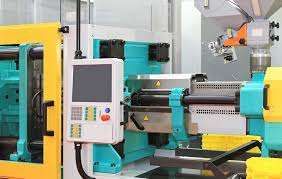
Injection moulding is one of the most widely used manufacturing processes, particularly for producing plastic parts. In this process, a material, usually plastic, is melted and injected into a mould cavity at high pressure. Once the material cools and solidifies, the part is ejected from the mould.
Advantages of Injection Moulding:
High efficiency for mass production
Capable of producing complex geometries
High repeatability and precision
Minimal material waste due to the ability to recycle scrap plastic
Applications: Injection moulding is used to produce a wide range of products, including automotive components, household appliances, medical devices, packaging, and consumer electronics.
2. Blow Moulding
Blow moulding is primarily used to create hollow plastic parts such as bottles, containers, and tanks. In this process, a heated plastic parison (a tube-like piece of plastic) is placed in a mould, and air is blown into it, forcing the plastic to conform to the shape of the mould.
Advantages of Blow Moulding:
Efficient for producing hollow parts in large quantities
Capable of creating parts with thin walls and uniform thickness
Suitable for both simple and complex shapes
Applications: Blow moulding is widely used in the packaging industry for producing plastic bottles and containers, as well as in the automotive industry for fuel tanks and air ducts.
3. Compression Moulding
Compression moulding involves placing a pre-measured amount of material, usually a thermoset plastic or rubber, into a heated mould cavity. The mould is then closed, and pressure is applied, causing the material to flow and fill the mould cavity. Once the material cures, the mould is opened, and the part is ejected.
Advantages of Compression Moulding:
Suitable for large, bulky parts
Capable of using materials that are not easily injection moulded
Ideal for producing parts with high strength and durability
Applications: Compression moulding is commonly used to manufacture rubber parts, automotive components, electrical insulation, and large composite parts.
4. Die Casting
Die casting is a metal moulding process in which molten metal, such as aluminum, zinc, or magnesium, is injected into a mould cavity at high pressure. The metal quickly solidifies, and the part is ejected from the mould. This process is ideal for producing metal parts with intricate designs and smooth finishes.
Advantages of Die Casting:
Produces strong, durable metal parts
High dimensional accuracy and surface finish
Suitable for high-volume production
Applications: Die casting is commonly used in the automotive, aerospace, and electronics industries for producing engine components, housings, and brackets.
5. Rotational Moulding
Rotational moulding, or rotomoulding, involves placing powdered plastic resin inside a mould, which is then heated and rotated on multiple axes. As the mould rotates, the plastic melts and coats the interior of the mould, forming a hollow part. Once cooled, the part is removed from the mould.
Advantages of Rotational Moulding:
Capable of producing large, hollow parts with uniform thickness
Low tooling costs compared to other moulding methods
Ideal for producing parts with complex shapes and low-stress levels
Applications: Rotational moulding is used to produce water tanks, playground equipment, kayaks, and large industrial containers.
6. Thermoforming
Thermoforming involves heating a plastic sheet until it becomes pliable, then forming it into a desired shape using a mould. The plastic is then cooled and trimmed to create the final part. This process is ideal for producing large, lightweight parts with simple designs.
Advantages of Thermoforming:
Low tooling costs compared to injection moulding
Suitable for large parts with thin walls
Quick turnaround for prototyping and small production runs
Applications: Thermoforming is used to produce packaging materials, trays, panels, and enclosures for a variety of industries.
The Moulding Process: From Design to Production
The moulding process begins with the design of the part and the creation of the mould. The quality of the mould is critical to the success of the production process, as it directly impacts the accuracy, surface finish, and overall quality of the final product. Let’s walk through the typical stages of the moulding process:
1. Design and Prototyping
The first step in any moulding project is designing the part and the mould. Computer-Aided Design (CAD) software is commonly used to create detailed 3D models of the part, which can be used to simulate the moulding process and identify potential design issues.
Prototyping may also be conducted at this stage to create physical models of the part using 3D printing or other rapid prototyping methods. This allows manufacturers to test the design and make adjustments before committing to full-scale production.
2. Mould Fabrication
Once the design is finalized, the mould is fabricated using precision machining techniques such as CNC (Computer Numerical Control) milling, electrical discharge machining (EDM), or 3D printing for additive mould fabrication. The mould material is chosen based on the type of production, with options ranging from hardened steel for high-volume production to aluminum for low-volume or prototyping purposes.
3. Material Selection
The choice of material for the part is another critical decision in the moulding process. Different materials have different properties, such as strength, flexibility, heat resistance, and chemical compatibility. Plastics, metals, and rubber are the most commonly used materials in moulding, and the specific application will determine which material is best suited for the job.
4. Production
Once the mould is ready and the material is selected, the production phase begins. The moulding machine is set up to inject, cast, or press the material into the mould cavity, where it takes the shape of the mould. After the material has cooled or cured, the part is ejected from the mould.
For high-volume production, automation may be used to streamline the process and ensure consistency. This can include robotic arms to remove parts from the mould or automated inspection systems to check for defects.
5. Finishing and Inspection
After the part is removed from the mould, it may undergo additional finishing processes such as trimming, painting, or polishing to achieve the desired surface quality. Each part is then inspected for defects, such as warping, sink marks, or incomplete filling of the mould.
Quality control is a critical aspect of the moulding process, particularly for industries that require high precision, such as aerospace or medical device manufacturing.
Industries Relying on Moulding Services
Moulding services are indispensable across a wide range of industries, each requiring parts with unique specifications and performance characteristics. Here are some of the key industries that rely on moulding technologies:
1. Automotive Industry
The automotive industry uses moulding services to produce a wide variety of components, including engine parts, interior trim, and exterior body panels. Injection moulding and die casting are particularly common in automotive manufacturing, where precision and durability are essential.
2. Medical Devices
The medical device industry relies on moulding services to produce components that meet strict regulatory standards for safety and hygiene. Injection moulding is used to create disposable medical instruments, drug delivery systems, and implantable devices.
3. Aerospace and Defense
In the aerospace and defense sectors, moulding services are used to produce lightweight, high-strength components such as aircraft interiors, structural components, and electronic housings. The precision and quality required in these industries make moulding an ideal solution.
4. Packaging
Blow moulding and thermoforming are widely used in the packaging industry to create containers, bottles, and trays. The ability to produce large volumes of packaging materials quickly and cost-effectively makes moulding services critical for this sector.
5. Consumer Electronics
Consumer electronics manufacturers use injection moulding to produce enclosures, connectors, and other components. The ability to create complex shapes with tight tolerances is essential for producing high-quality electronic devices.
The Future of Moulding Services: Emerging Trends
As technology continues to evolve, the moulding industry is also experiencing significant advancements. Here are some of the emerging trends shaping the future of moulding services:
1. Additive Manufacturing
Additive manufacturing, or 3D printing, is increasingly being used in conjunction with traditional moulding techniques. 3D-printed moulds are being used for rapid prototyping, allowing manufacturers to test designs before committing to expensive production moulds. In some cases, additive manufacturing is even being used for low-volume production.
2. Sustainability
Sustainability is becoming a key consideration in the manufacturing industry, and moulding services are no exception. The use of biodegradable and recycled materials in moulding processes is gaining traction, as is the development of more energy-efficient moulding machines. Additionally, moulding companies are adopting lean manufacturing principles to reduce waste and improve efficiency.
3. Automation and Industry 4.0
Automation is playing an increasingly important role in moulding services, with robots being used to handle parts, inspect quality, and even change moulds. Industry 4.0 technologies, such as the Internet of Things (IoT) and data analytics, are enabling real-time monitoring of moulding processes, leading to improved quality control and predictive maintenance.
4. Advanced Materials
New materials are being developed that offer improved performance characteristics, such as higher strength, heat resistance, or chemical resistance. These materials are enabling the production of more advanced parts for industries such as aerospace, automotive, and medical devices.
Conclusion
Moulding services are a cornerstone of modern manufacturing, enabling the production of high-quality, precision parts for a wide range of industries. From injection moulding to die casting and blow moulding, the versatility and efficiency of moulding processes make them indispensable for high-volume production.
As technology continues to advance, the moulding industry is poised to see further innovation in areas such as automation, sustainability, and additive manufacturing. By staying at the forefront of these trends, moulding companies can continue to provide the solutions needed to meet the evolving demands of the global manufacturing industry.